Participant Listings Reshaping Court Allocations Across Overlapping Fee-Based Athletic Networks
Devon Schwarz · Oct 3, 2026
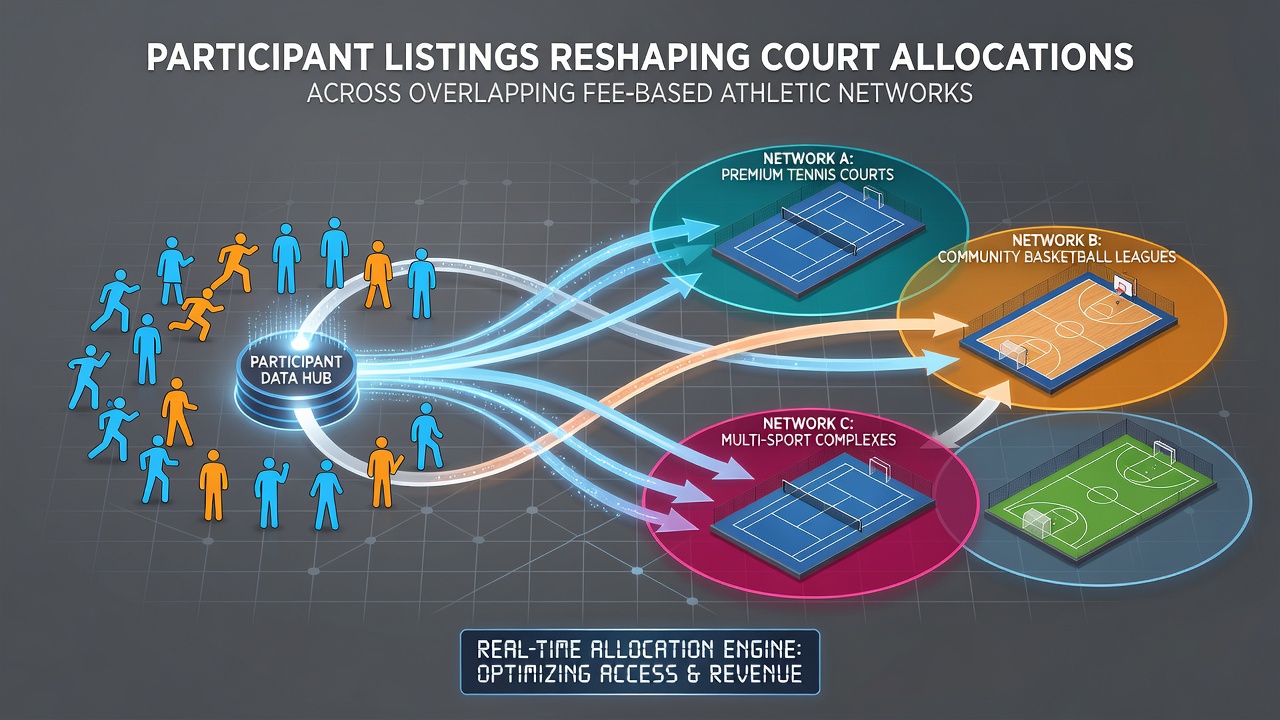
Participant Listings Reshaping Court Allocations Across Overlapping Fee-Based Athletic Networks
Participant listings function as foundational data streams that determine court availability in networks where multiple fee-based athletic programs share limited venues, and these listings drive real-time adjustments to timetables when enrollment numbers shift. Organizers collect names, skill levels, and availability details from each league, then feed that information into centralized allocation systems which recalibrate session blocks to prevent conflicts across overlapping schedules.
Data Streams Driving Allocation Decisions
Facilities that host several pay-to-play leagues rely on consolidated participant records to forecast demand, and studies from the National Recreation and Park Association show that accurate enrollment figures reduce double-booking incidents by up to thirty percent in metropolitan areas. When a league adds or drops players, the updated counts trigger automated reviews of court usage patterns, allowing administrators to reassign time slots among basketball, volleyball, and tennis programs that operate on the same indoor complex.
Integration Across League Boundaries
Shared databases now link registration portals from different organizations, so a spike in youth soccer sign-ups can immediately affect adult pickleball court access later the same week. In October 2026, several regional hubs reported that synchronized listing protocols helped redistribute thirty-five hours of weekly court time after one league experienced a twenty-percent enrollment surge. Those adjustments occurred without manual intervention because the system cross-referenced participant counts against existing venue contracts and automatically proposed revised schedules for all overlapping groups.
Coordinators note that participant data also incorporates geographic and demographic variables, which further refines allocation logic. A cluster of players living near a particular facility can justify priority booking for that site, whereas dispersed rosters may prompt managers to spread sessions across multiple locations to minimize travel burdens. This layered approach keeps utilization rates high while respecting the contractual obligations each league holds with venue operators.
Practical Effects on Timetable Adjustments
When listings reveal uneven participation across age groups or skill brackets, administrators often compress or expand session lengths to match actual demand. One documented case involved a multi-sport complex in the Midwest where an influx of intermediate-level entrants prompted the reallocation of four prime evening courts from advanced training to mixed-level play, freeing earlier slots for advanced groups whose numbers had declined. Such shifts occur regularly because the underlying data updates flow directly into scheduling software used by all participating leagues.
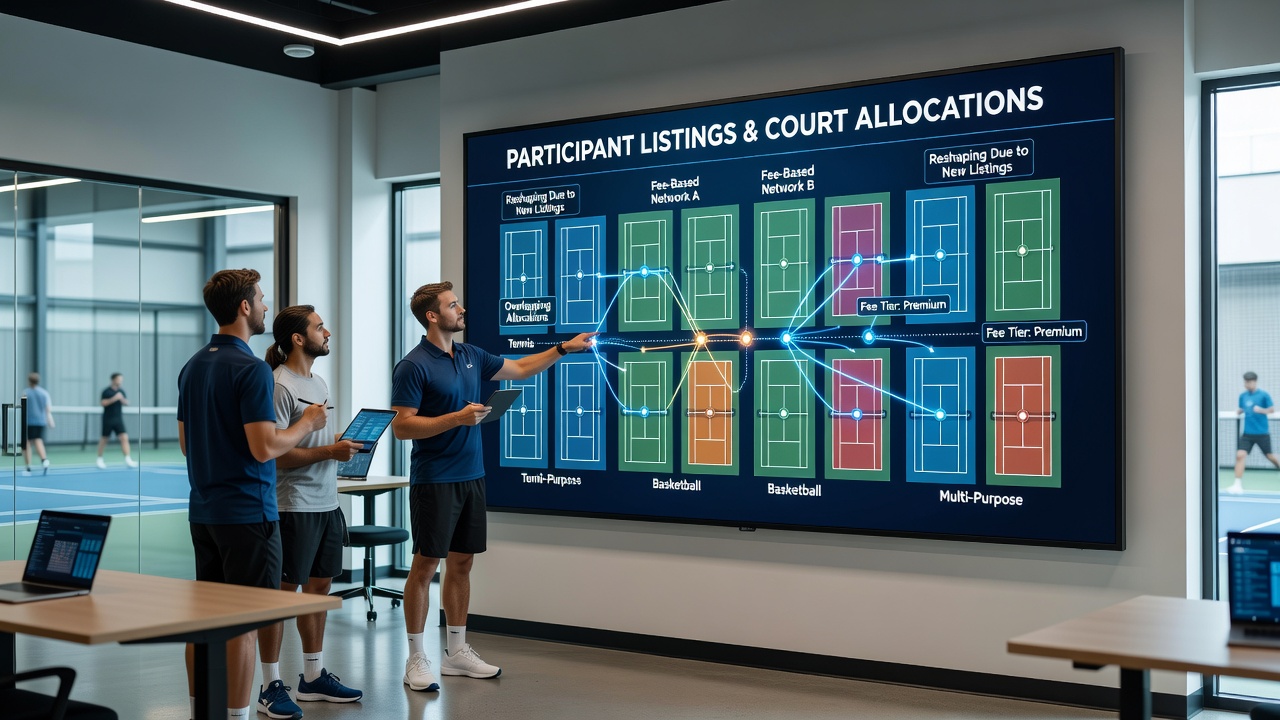
External reporting from Sport Australia indicates that facilities adopting integrated listing platforms experienced measurable gains in overall throughput during peak seasons. The same reports highlight how mid-season roster changes, once processed, can alter fixture lists within forty-eight hours, giving organizers and players clearer visibility into available court times across the entire network.
Resource Balancing in Multi-League Environments
Overlapping fee structures add another dimension because each league pays different rates for court access. Systems that incorporate both participant volume and payment tiers allow venue managers to prioritize allocations that maximize revenue while still honoring participation commitments. Data from the Canadian Sport Institute Pacific demonstrates that transparent listing protocols reduce disputes among leagues by providing verifiable enrollment evidence that supports every scheduling decision.
Coaches and league officials receive periodic summaries showing how their rosters influence broader allocations, which encourages earlier submission of accurate counts. In turn, this feedback loop stabilizes planning across the network and limits last-minute cancellations that previously disrupted shared calendars. The result appears in smoother transitions between consecutive sessions and fewer idle courts during traditionally high-demand periods.
Conclusion
Participant listings continue to serve as the primary mechanism for reshaping court allocations in environments where multiple fee-based programs compete for the same facilities. As integration tools mature, the speed and precision of these adjustments increase, allowing networks to respond to enrollment fluctuations without compromising the operational needs of any single league. Continued refinement of data-sharing practices will likely determine how efficiently shared athletic resources meet growing demand in coming seasons.