Roster Ripples: Age Group Dynamics Influencing Match Sequencing at Congested Athletic Sites
Hugo Patterson · Oct 17, 2026
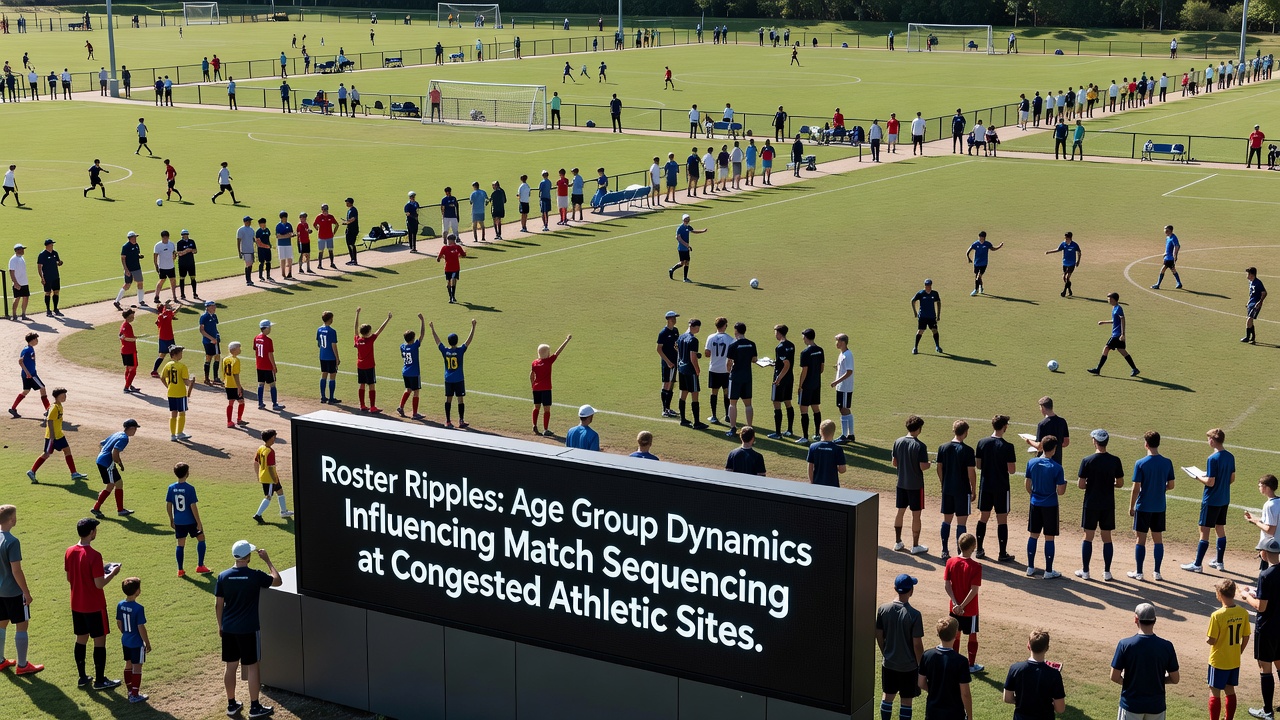
Roster Ripples: Age Group Dynamics Influencing Match Sequencing at Congested Athletic Sites
Age group dynamics in team rosters create distinct patterns when organizers sequence matches at athletic sites that handle high volumes of simultaneous activity, and data from multi-venue facilities across North America and Europe shows these patterns affect everything from court availability to referee assignments. Rosters that mix under-12 squads with adult divisions often require staggered start times because younger players need shorter game durations and additional safety buffers, while older groups compete in longer formats that extend into evening slots. This sequencing process becomes more intricate when sites operate near capacity, as overlapping age brackets compete for the same resources during peak weekend windows.
How Roster Composition Shapes Initial Scheduling Frameworks
Facility managers at congested athletic complexes compile roster data early in the planning cycle to determine which age cohorts can share adjacent fields without creating bottlenecks, and records from several regional leagues indicate that under-14 teams typically receive priority morning blocks because their matches finish faster and allow turnover for subsequent groups. Adult divisions, by contrast, often land in afternoon or twilight periods when lighting systems activate and noise considerations shift. Observers at large complexes note that these initial allocations ripple outward when a single roster change, such as an age-eligible player moving up a bracket, forces rescheduling across multiple fields to maintain separation between youth and senior play.
Research from the Australian Sports Commission highlights how facilities in metropolitan areas use age-stratified algorithms to predict total field hours required per weekend, and those projections feed directly into match order because younger cohorts demand more frequent water breaks and equipment resets. When rosters include transitional age groups, such as under-16 players eligible for both youth and open divisions, planners insert buffer periods between games to accommodate different rule sets and medical protocols. This approach reduces conflicts yet extends overall site operating hours, particularly during October periods when seasonal leagues overlap with school holidays and participation rates rise.
Sequencing Adjustments During Peak Congestion Periods
At sites where multiple leagues share infrastructure, age group composition influences real-time adjustments once matches begin, and tracking systems at several Canadian complexes record that delays in one youth bracket quickly cascade to adult fixtures because shared parking, restrooms, and medical stations reach capacity faster than anticipated. Coordinators respond by advancing or delaying later age groups, which alters warm-up zones and creates secondary effects on concession operations and spectator flow. Figures from the German Olympic Sports Confederation show that facilities employing age-based sequencing software experience fewer mid-day idle periods, yet those same tools require constant roster updates to prevent mismatches in physical demands between brackets.
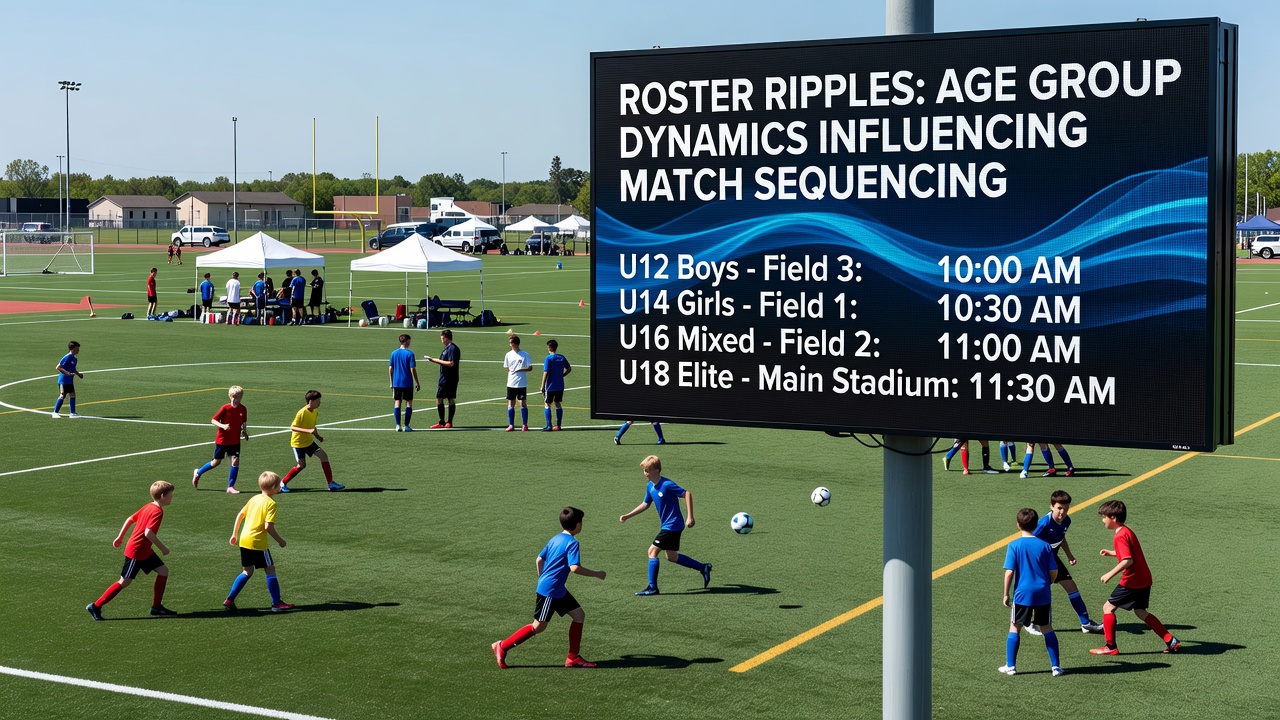
One documented pattern appears when under-10 teams finish early and release fields ahead of schedule, prompting managers to insert older age groups that can start sooner, whereas late-finishing senior matches push back subsequent youth sessions that cannot extend past daylight restrictions. These adjustments rely on live roster verification to confirm player eligibility across brackets, and data streams from participant management platforms feed directly into sequencing decisions at multi-field venues.
Resource Allocation and Age Bracket Interactions
Shared athletic sites allocate referees, scorekeepers, and maintenance crews according to age-specific requirements, and studies compiled by the NCAA indicate that youth divisions often receive additional officials per match while adult games operate with minimal staffing, creating imbalances when age groups are sequenced consecutively on the same field. Lighting and sound restrictions further differentiate brackets, because evening adult matches may continue under artificial illumination whereas youth sessions conclude earlier to align with curfews and transportation needs. Those who manage congested sites report that roster accuracy becomes critical when an age-group swap occurs, since incorrect sequencing can leave specialized equipment, such as smaller goals or modified nets, unavailable for the next bracket.
October 2026 schedules at several European complexes already incorporate projected increases in mixed-age events, and planners use historical roster data to forecast how these events will affect sequencing when adult recreational leagues run parallel to expanded youth academies. The resulting timelines show tighter clustering of similar age groups to minimize equipment changes, while divergent brackets receive wider spacing to accommodate differing recovery and hydration protocols.
Conclusion
Age group dynamics embedded in team rosters exert measurable influence on match sequencing at athletic sites operating under congestion, and ongoing data collection from facilities worldwide continues to refine the models used for allocation. Accurate roster information remains central to these processes because it enables coordinators to anticipate and mitigate conflicts before they disrupt the broader event timeline.