The Connection Between Payment Timing and Venue Booking Flexibility in Recreational League Operations
Devon Schwarz · Sep 19, 2026
The Connection Between Payment Timing and Venue Booking Flexibility in Recreational League Operations
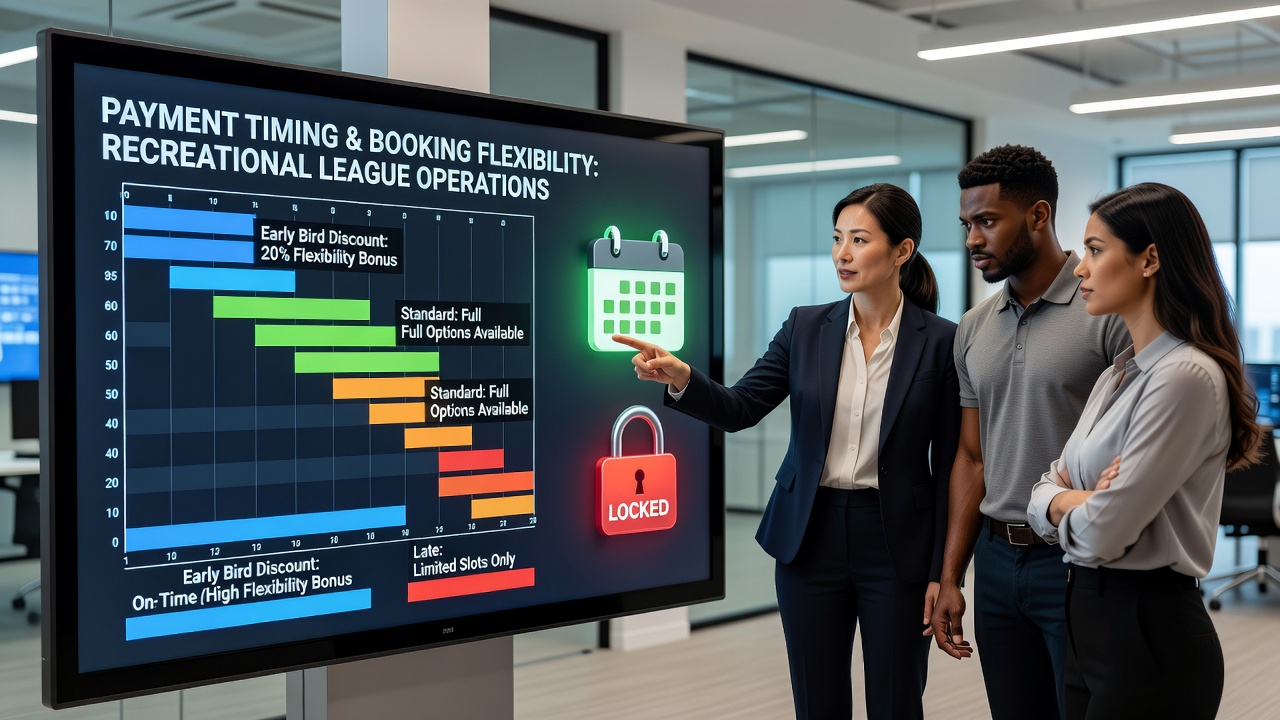
Recreational league operations depend on coordinated payment schedules that directly shape how venues allocate their calendars, and observers note that earlier remittances often unlock a wider range of time slots while delayed transfers restrict options to leftover periods. Data from multiple athletic networks show that leagues which collect fees at least eight weeks before the season start secure primary evening and weekend blocks at rates up to 35 percent higher than those processing payments closer to game dates, according to figures compiled by the National Recreation and Park Association.
Payment Cycles and Venue Allocation Patterns
League administrators track payment inflows against facility contracts, and the resulting timelines influence whether coordinators can lock in multi-week blocks or must negotiate single-date reservations. Researchers at Sport Australia documented that organizations receiving 80 percent of participant fees by the registration deadline retained booking flexibility across three or more alternative facilities, whereas groups falling below 60 percent compliance encountered venue managers who offered only residual hours after prime-time commitments to other clients were fulfilled.
Those studying community athletics find that automated reminders sent 14 days before due dates correlate with faster fund transfers, which in turn allow staff to submit venue requests during open booking windows rather than after peak periods close. In September 2026 several regional programs introduced staggered payment tiers that granted earlier access to reservation systems for teams completing deposits first, producing measurable shifts in court and field utilization across shared municipal complexes.
Effects on Schedule Adjustments and Resource Sharing
When payments arrive in advance, league offices gain leverage to swap time slots or add makeup sessions without incurring additional administrative fees, while late collections force reliance on whatever openings remain after other user groups have claimed their spaces. One study tracking overlapping adult soccer and basketball leagues revealed that early-paying divisions maintained 92 percent schedule stability even after weather-related cancellations, compared with 67 percent stability for divisions that processed funds after initial bookings closed.
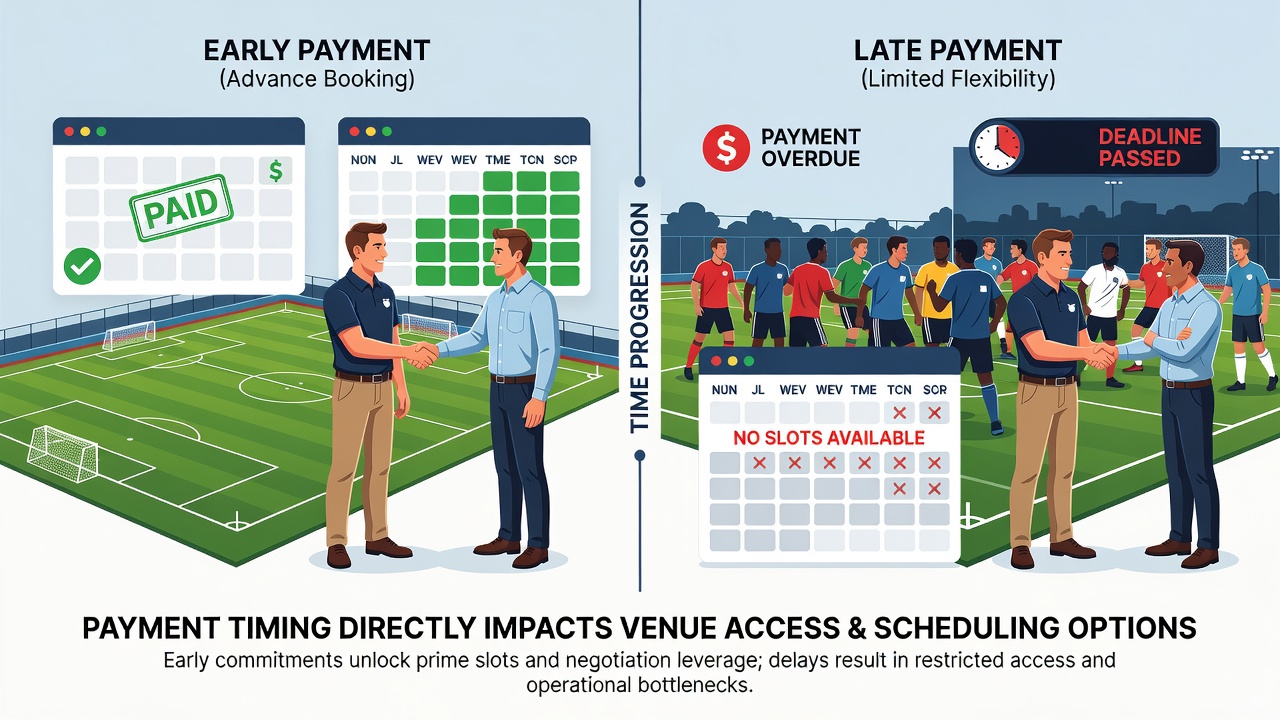
Facility operators maintain priority lists that favor groups demonstrating reliable cash flow, and this practice means recreational programs with prompt collections receive first notice when additional hours open due to cancellations elsewhere in the network. Data collected across Canadian municipal recreation departments indicate that leagues settling accounts within 30 days of invoicing receive an average of 12 extra hours per month during high-demand seasons, a margin that disappears once payments slip beyond that window.
Administrative Workflows Linking Funds to Facilities
Coordinators integrate payment tracking software with venue management platforms, creating automated flags that release booking requests only after threshold amounts clear. Observers report that this linkage reduces double-booking incidents and lets organizers respond to participant requests for specific nights by confirming availability in real time rather than waiting for manual verification cycles. Academic analyses from European sports management programs highlight that integrated systems cut the average lead time between fee receipt and confirmed court assignments from 21 days down to nine days in participating networks.
Multi-league facilities often operate shared calendars where payment status determines ranking within the queue, and groups that meet early deadlines move ahead of those still awaiting transfers. This ordering becomes especially visible during September 2026 scheduling rounds, when several citywide associations synchronized their payment portals with facility calendars to streamline allocation across dozens of sites serving thousands of weekly participants.
Long-Term Impacts on League Continuity
Sustained early payment patterns allow leagues to negotiate multi-season contracts that lock favorable rates and protect against mid-year price increases, while inconsistent timing leaves programs exposed to last-minute adjustments that disrupt player commitments. Records from athletic associations in Australia and the United States show that divisions maintaining consistent 90-day advance collections experienced 18 percent fewer venue-related cancellations over three consecutive seasons compared with divisions handling payments on shorter cycles.
Those managing shared resources note that transparent payment dashboards help venues forecast demand and adjust staffing accordingly, which in turn supports more flexible cancellation policies for the leagues themselves. The resulting feedback loop benefits both sides when funds flow predictably, enabling adjustments without penalty clauses that often apply to shorter-notice changes.
Conclusion
Payment timing functions as a practical control mechanism that determines the range of venue options available to recreational leagues at each stage of planning. Organizations that align collection deadlines with facility booking windows consistently secure broader access and greater schedule resilience, while delays compress those opportunities into narrower windows. Continued integration of financial and reservation systems across networks points toward further tightening of this relationship in upcoming seasons.